Circular Economy in Singapore: The Scrap Metal Role
TL;DR — Singapore’s circular economy ambition depends on metal. Under the National Environment Agency (NEA) Zero Waste Masterplan, the country aims to cut waste sent to Semaku Landfill by 30% by 2030. Scrap metal is already Singapore’s highest-performing waste stream — recycling rates consistently above 95% — and licensed dealers like Molten Steel are the operational link between discarded metal and new material for regional mills.
What “Circular Economy” Means in the Singapore Context
A circular economy keeps materials in use for as long as possible, extracting maximum value before responsibly recovering and regenerating them at end-of-life. It’s the opposite of the linear “take-make-dispose” model. For a land-scarce, resource-light country like Singapore, circularity isn’t optional — it’s a national survival strategy tied directly to landfill capacity at Pulau Semakau.
NEA’s Zero Waste Masterplan (published 2019, updated under the Resource Sustainability Act 2019) sets targets: raise the overall recycling rate to 70% by 2030, and extend Semakau Landfill’s lifespan beyond 2035. Metal plays an outsized role because, unlike plastic or food waste, metal can be recycled infinitely without quality loss.
Singapore’s Recycling Numbers: Metal Leads
NEA’s annual Waste Statistics paint a clear picture. In 2023, Singapore generated roughly 6.8 million tonnes of solid waste. The overall recycling rate was 52%, but the breakdown is uneven:
- Ferrous metal: ~99% recycled (around 1.2 million tonnes recovered)
- Non-ferrous metal: ~94% recycled (copper, aluminium, brass, lead)
- Construction & demolition waste: ~99% recycled (much of it metal-laden)
- Paper/cardboard: ~34%
- Plastics: under 6%
The reason metal performs this well is economics plus logistics. Scrap has persistent market value pegged to the London Metal Exchange, so it doesn’t need subsidies to move. Collection networks, including licensed scrap metal dealers, already exist and operate profitably.
Why Metal Is a “Perfect” Circular Material
Three properties make metal structurally circular:
- Infinite recyclability. An aluminium can recycled today can become another can, a window frame, or an engine block tomorrow — with the same performance characteristics as primary metal from bauxite ore.
- Dramatic energy savings. Recycling aluminium uses roughly 5% of the energy needed to produce primary aluminium from ore. For copper, recycled metal saves around 85% of the energy of mining and smelting. For steel, about 60–74%.
- Embedded value. A kilogram of copper scrap is worth S$8–10; a kilogram of mixed municipal plastic is worth cents. That value funds collection and sorting without government intervention.
If you’re unsure which category your material falls under, our ferrous vs non-ferrous identification guide walks through the basics.
Where Licensed Dealers Fit In
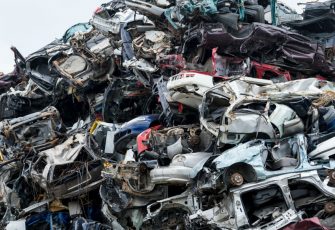
NEA-licensed scrap metal dealers sit at the aggregation point between the entities that generate scrap — shipyards, construction sites, factories, MRT contractors, electrical rewirers, and households — and the downstream smelters that convert scrap back into ingot, billet, or rebar. Without dealers, materials would either sit idle, be exported inefficiently, or end up at Tuas South incinerators and, eventually, Semakau.
A compliant dealer provides four circular-economy functions:
- Sortation — separating ferrous from non-ferrous, clean from contaminated, grade A from grade B
- Densification — baling, shearing, shredding to make transport economic
- Traceability — paperwork proving the scrap’s origin, critical for environmental audits and for customers with ISO 14001 or sustainability reporting obligations
- Market access — relationships with smelters in Malaysia, Thailand, Vietnam, Taiwan, India, and South Korea where most Singapore scrap is ultimately processed
How Molten Steel Contributes
Molten Steel operates as an NEA-licensed general waste collector and scrap metal dealer. Each month we process several hundred tonnes of ferrous and non-ferrous scrap — everything from HMS 1 & 2 (heavy melting steel) off shipyards to copper winding from retired motors. That material is graded, consolidated, and shipped to audited smelters in the region, where it re-enters the supply chain as new metal.
Concretely, for a client, circular participation looks like this:
- You generate scrap — demolition, factory offcuts, end-of-life equipment.
- We collect (free pickup above minimum weight), weigh on certified scales, and pay at LME-benchmarked rates.
- We issue documentation that your sustainability/ESG team can use to claim diverted tonnage.
- The material is smelted back into usable metal, typically within 60–90 days of collection.
For larger corporate clients with reporting obligations, we can provide a simple diverted-from-landfill statement per collection.
What Still Needs to Improve
Singapore’s scrap metal recycling rate is near its ceiling — you can’t realistically exceed 99%. The remaining circular-economy gains will come from three areas: better separation at source (especially from households and e-waste, where metal ends up bundled with mixed waste), more onshore processing capacity instead of export-heavy flows, and stricter documentation standards so downstream buyers can trust origin claims. NEA’s Extended Producer Responsibility (EPR) framework for e-waste, operational since 2021, is already shifting some of these flows.
Key Takeaways
- Singapore’s circular economy target (70% recycling by 2030) is already exceeded inside the metal stream.
- Metal is infinitely recyclable with 60–95% energy savings versus primary production.
- NEA-licensed dealers are the operational bridge between scrap generators and smelters — see our dealer vs recycler guide.
- Selling scrap isn’t just income — it’s ESG-accountable landfill diversion. Here’s how to get started.
A Client’s Perspective: Why the Circular Loop Matters
For corporate clients — especially manufacturers, shipyards, electrical contractors, and facility managers — the circular economy isn’t just a policy headline. It’s increasingly a buyer requirement. Multinationals operating in Singapore typically sit inside a parent group that reports against frameworks like the Global Reporting Initiative (GRI), the Sustainability Accounting Standards Board (SASB), or the Task Force on Climate-related Financial Disclosures (TCFD). All of these expect data on materials recycled versus disposed.
A credible diverted-from-landfill figure has two components: tonnage and evidence. Tonnage comes from certified weighbridge or platform-scale readings. Evidence comes from the dealer’s paper trail — licence numbers, weigh tickets, and receipt documentation demonstrating the material actually moved into the recycling stream rather than into general waste. Partnering with an NEA-licensed dealer that produces clean records turns what would otherwise be a cost line into a reporting asset.
On the operational side, clients often discover that formalising their scrap flow reveals process improvements: fabrication offcut rates that were never measured, hidden yield loss in machining operations, or packaging metal that accumulates in corners of a warehouse. Making the flow visible is half the win; routing it to a licensed recycler captures the rest.
Related Reading
- Scrap Metal Prices in Singapore
- Scrap Metal Dealer vs Recycler — What’s the Difference?
- Our Scrap Metal Recycling Service
- How to Sell Scrap Metal in Singapore
Sell your scrap today. Molten Steel buys at LME-benchmarked rates across Singapore. Call +65 9106 7577 or WhatsApp for a quick quote.
Singapore recycles 99% of its ferrous scrap. The question isn’t whether metal is circular — it’s whether your business captures that value.
Molten Steel Pte Ltd — NEA-licensed scrap metal dealer, Singapore