Is Stainless Steel Recyclable? The Full Answer
TL;DR: Yes — stainless steel is 100% recyclable, and it is one of the most recycled materials on earth. Global recycling rates sit above 90%. Recycling stainless saves 60–70% of the energy needed to make it from virgin ore, and grades like 304 and 316 retain nearly all their original value through each cycle because the nickel, chromium, and molybdenum alloying elements remain intact.
Stainless steel is often described as the poster child of the circular economy, and rightly so. Unlike plastics, which degrade each time they are recycled, stainless can be melted down and reformed indefinitely without any loss in quality, strength, or corrosion resistance. This guide explains the how, the why, and — if you are sitting on stainless scrap in Singapore — what it is worth.
Yes, All Stainless Steel Grades Are Recyclable
Every stainless steel grade ever produced — 304, 316, 430, 409, duplex 2205, even the specialty heat-resisting 310S — is recyclable. The alloying elements (chromium, nickel, molybdenum, manganese) do not get destroyed in melting. They simply redistribute into the new batch of steel, which is why mills can produce certified grade 316L directly from a charge of sorted 316 scrap plus a small top-up of virgin alloying metals.
The global average recycled content of new stainless steel production is around 60%. In mature scrap markets — Singapore, Japan, Western Europe — the figure can exceed 85%.
How the Stainless Steel Recycling Process Works
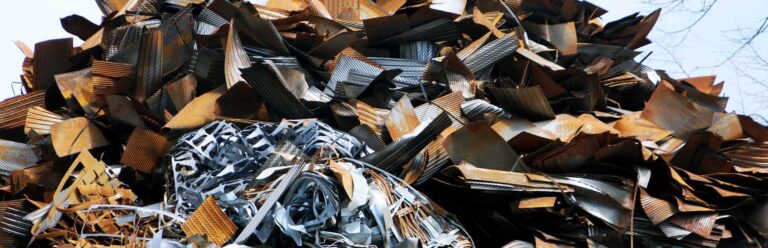
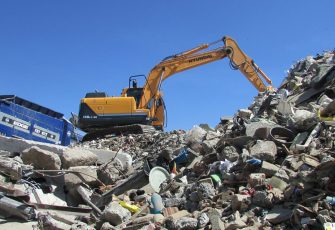
- Collection. Scrap is collected from kitchens, construction demolition, shipyards, food-processing plants, and manufacturing offcuts. Molten Steel’s Singapore yards process both industrial and household-scale volumes.
- Sorting by grade. Yards use handheld XRF spectrometers and magnet tests to separate 304 (austenitic, non-magnetic), 316 (non-magnetic, contains molybdenum), 430 (ferritic, magnetic), and other grades. Grade purity is critical — mixed 304/316 charges cannot be certified as 316 at the mill.
- Shearing and baling. Large pieces are sheared into mill-friendly lengths; thin sheet is baled for transport.
- Melting. Charges go into an electric arc furnace (EAF). EAFs run almost entirely on scrap, which is why stainless recycling is dramatically less energy-intensive than primary production.
- Refining and casting. The molten steel is refined — chromium, nickel, and carbon levels adjusted — then continuously cast into slabs or billets for the next round of production.
Energy and CO2 Savings From Recycling
Producing stainless from 100% virgin materials requires mining iron ore, nickel ore (typically laterite), and chromite, plus the energy to smelt each. One tonne of virgin stainless carries roughly 6.5 tonnes of CO2-equivalent emissions. Recycled stainless, by contrast, requires only electric-arc melting and refining.
Energy saving versus virgin production: approximately 60–70%. CO2 savings are in the same ballpark — about 2.0 tonnes of CO2 avoided per tonne of recycled stainless. Over the 55 million tonnes of stainless produced globally each year, the aggregate impact is measured in hundreds of millions of tonnes of CO2.
Why 304 and 316 Are Especially Valuable
The austenitic 300-series grades command the highest scrap prices because of their nickel content. 304 is nominally 18% chromium and 8% nickel (often called 18/8); 316 adds 2–3% molybdenum for marine corrosion resistance. Nickel and molybdenum are expensive commodities in their own right — nickel trades around US$18,000–22,000 per tonne on the LME — which is why 316 scrap typically fetches 20–30% more than 304, and 4–6× more than ferritic 430.
We publish a detailed breakdown in our 304 vs 316 stainless scrap guide, including how to field-test which grade you have without an XRF.
Global Stainless Recycling Rates
According to the International Stainless Steel Forum (ISSF), stainless steel has one of the highest end-of-life recycling rates of any engineering material:
| Sector | Approx. EOL recycling rate |
|---|---|
| Construction and infrastructure | 92% |
| Industrial machinery | 95% |
| Transport (rail, ship, auto) | 90% |
| Household appliances | 90% |
| Catering and kitchenware | 85% |
The dominant loss pathway is not disposal — it is misidentification, where stainless items get mixed into general ferrous scrap and melted down into carbon steel. Sending stainless directly to a specialist yard preserves its full value.
Circular Economy: Stainless Is the Case Study
Closed-loop material flows are the defining feature of a circular economy. Stainless steel ticks every box: infinite recyclability, high economic value at end-of-life, mature global collection and sorting infrastructure, and direct substitution of recycled scrap for virgin ore in production. A stainless benchtop installed in a Singapore hawker centre in 1985 has probably been melted down twice already and is now, statistically, part of someone else’s car exhaust or kitchen sink.
For a broader view of how stainless fits into the ferrous/non-ferrous classification, see our ferrous vs non-ferrous identification guide.
Recycling Your Stainless Scrap in Singapore
Molten Steel buys all stainless grades by weight, at LME-benchmarked rates, across Singapore. Contractors can send a photo on WhatsApp for a same-day quote; larger commercial loads get a free pickup. See our stainless steel scrap service page for current rate tables and collection logistics.
A rough guide on April 2026 rates: 316 kitchen-grade scrap at S$2.40–2.80/kg, 304 at S$1.80–2.20/kg, 430 at S$0.40–0.60/kg. Exact rates move daily with LME nickel and chromium.
FAQ
Is stainless steel 100% recyclable?
Yes. Every stainless grade — from 304 and 316 to ferritic 430 and duplex 2205 — is fully recyclable, with no loss of quality or corrosion resistance through successive cycles.
How much energy does stainless recycling save?
Recycled stainless requires 60–70% less energy to produce than virgin stainless, and avoids roughly 2 tonnes of CO2-equivalent emissions per tonne produced.
Does stainless lose quality when recycled?
No. Because the alloying elements (chromium, nickel, molybdenum) survive the melt, recycled stainless can be recertified to exactly the same specification as virgin material.
Related reading
- Stainless Steel 304 vs 316 Scrap Guide
- Stainless Steel Scrap Buying Service
- Ferrous vs Non-Ferrous Identification Guide
- London Metal Exchange Singapore Scrap Guide
- Scrap Metal Prices Singapore
Sell your scrap today. Molten Steel buys at LME-benchmarked rates across Singapore. Call +65 9106 7577 or WhatsApp.