
E-Waste Recycling Singapore
Metal recovery from industrial electronics, servers, PCBs, cables
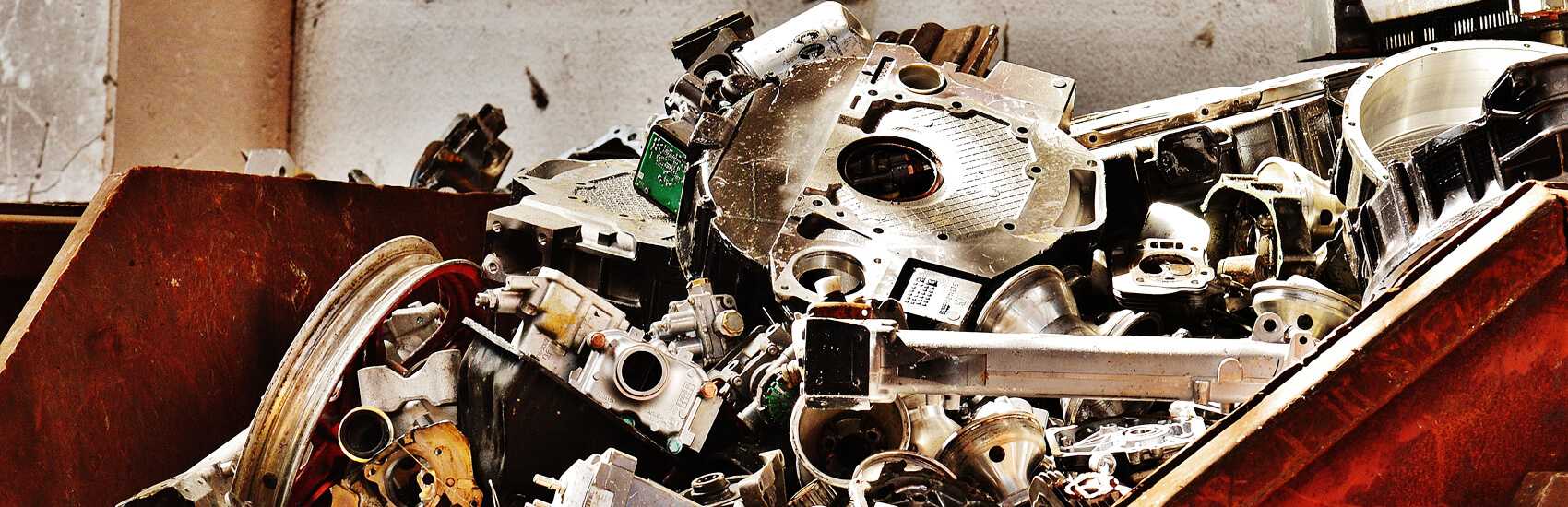
E-waste in Singapore is one of the fastest-growing waste streams — and one of the most valuable when processed correctly. Old servers, industrial PCBs, cable runs, and end-of-life electronics contain substantial copper, aluminium, gold, silver, and steel. Molten Steel’s e-waste recycling service recovers that metal and compensates businesses fairly.
What E-Waste We Process
- Industrial electronics — servers, switches, routers, rack-mount equipment
- Cable and wiring runs — CAT5/6 network cabling, power cables, fibre (metal parts)
- Printed circuit boards (PCBs) — motherboards, control boards, telecom boards
- Power supplies and UPS units — contain copper transformers and aluminium housings
- Office electronics fleets — on end-of-life rollouts (subject to volume thresholds)
- Industrial control panels — PLCs, VFDs, motor starters
What We Don’t Process
For consumer e-waste (individual phones, laptops, household appliances), Singapore has NEA-approved Alba e-waste bins across the island — that’s the right channel for domestic quantities. We focus on commercial volumes where metal recovery is economically viable.
How the Recovery Process Works
- Site survey — for larger e-waste fleets we visit, inventory, and provide a consolidated quote.
- Secure transport — sensitive equipment (servers with drives) handled with a chain-of-custody protocol if you require data destruction.
- Dismantling at our yard — cable stripping, PCB separation, metal extraction.
- Metal grading and weighing — each recovered fraction priced against its respective LME or market rate.
- Same-day payment for the recovered metal value, less agreed processing fee for larger jobs.
- Compliance paperwork — disposal documentation for audit/ISO requirements.
Why E-Waste Recycling Pays
- A typical 1U rack server contains ~1.5kg of copper + aluminium housing — meaningful scrap value
- Bulk network cabling is almost entirely copper scrap — at $7.50-9/kg depending on insulation
- Server racks are clean HMS
- Power supplies yield copper transformers + aluminium heat sinks
Data Security
For equipment with storage (servers, network appliances with NVRAM), we work with NEA-approved data destruction partners. We can arrange hard-drive shredding and issue a certificate of destruction before the metal recovery step. Talk to us about your compliance requirements.
Who We Work With
Data centres, telco infrastructure operators, IT service companies doing fleet rotations, banks on ITAM refreshes, and industrial facilities retiring control systems. If you’re clearing 100+ units of networked equipment or a rack cluster, call us.
The Detailed Commercial E-Waste Process
Industrial and enterprise e-waste is a chain-of-custody problem as much as a metal recovery problem. For data centres, banks, and manufacturing control system upgrades the workflow looks like this.
- Asset inventory — we work from your asset register (or build one on-site) listing every unit to be retired: racks, servers, switches, PDUs, UPS, KVMs, cable tray contents, storage arrays.
- Chain-of-custody intake — sealed labels applied at pickup, signed transfer docket, two-person sign-off for high-sensitivity sites. Vehicles are GPS-tracked to destination.
- Data destruction coordination — where drives are present we coordinate with our NEA-approved shredding partners for physical destruction; a certificate of destruction is issued per drive, cross-referenced to your asset register.
- Dismantling at our Gul Circle yard — equipment is broken down to recoverable fractions: copper cable, aluminium housing, steel chassis, PCBs, transformers, power factor correction capacitors.
- Metal extraction and grading — each fraction weighed and graded against LME-linked rates for the underlying metal.
- Compliance certificates issued — disposal certificate, chain-of-custody summary, weight-by-fraction breakdown, and where applicable CO2-equivalent savings for your ESG reporting.
- Payment or net invoicing — high-copper loads (cable runs, transformers) usually net positive. Mixed PCB-heavy loads may carry a processing fee; quoted transparently upfront.
What Makes This Different from Generic E-Waste Collection
- Commercial-volume focus — we are built for rack-cluster decommissions, floor re-fits, and fleet refreshes, not one-off consumer drop-offs. Consumer items should go to NEA Alba bins.
- NEA-licensed scrap dealer — ensures the metal recovery side is auditable end-to-end, not just the data destruction.
- Chain-of-custody for sensitive equipment — sealed-vehicle transport, two-person handover, serial-number tracking, destruction certificate per drive.
- Actual metal recovery — many e-waste vendors simply on-sell to recyclers with a margin layered on. We recover the metal ourselves at our own yard, which is why we can pay meaningfully more for copper-heavy and aluminium-heavy loads.
- ISO 14001 and ESG documentation — annual consolidated reports are available for your environmental management system.
- Tied into the wider metal market — because we also trade copper, aluminium, and steel, your recovered value is benchmarked to actual LME pricing instead of an opaque ‘e-waste’ flat rate.
Typical Commercial E-Waste Clients
- Data centres and co-location providers — rack refreshes, tenant move-outs, end-of-lease hardware returns, damaged or fire-affected equipment. Volumes range from a single rack cluster to full-floor decommissions.
- Banks and financial institutions on ITAM refresh — typically a 4- or 5-year refresh on desktops, laptops, network gear, and branch hardware. Data destruction compliance is non-negotiable.
- Telcos and network operators — retired core network gear, exchange equipment, base station hardware, copper trunk cabling from infrastructure projects. Cable runs alone can yield tonnes of recoverable copper.
- Enterprise IT fleets — MNC Asia-Pacific HQs rotating laptop and desktop fleets on a scheduled cycle. Asset register reconciliation is the central requirement.
- Manufacturing control system upgrades — factories retiring PLCs, VFDs, HMIs, motor control centres, and industrial PCs when a plant modernises. Often paired with our wider industrial scrap workflow.
How Recovery Value Breaks Down
It helps to know roughly what you are selling. The figures below are April 2026 averages from our own processing yields.
- 1U rack server — ~1.2-1.8kg copper (heat sinks, power supply windings, cabling), ~2-3kg aluminium (chassis, housing), ~4-6kg steel (frame), plus PCBs. Recovery value: S$10-25 per unit depending on config.
- Full 42U populated rack — 40-80kg of copper, 60-120kg of aluminium, 120-250kg of steel, plus substantial PCB mass. Recovery value: S$400-1,200.
- Structured Cat6 cable run — approximately 60-70% copper by weight after stripping. At current copper rates (~S$8/kg for bright wire), a 100kg cable run nets roughly S$400-500.
- UPS units (10-20 kVA commercial) — copper transformers, aluminium heat sinks, lead-acid batteries (priced separately via lead scrap). Recovery: S$30-120 per unit.
- PCB boards — recovery depends on density and gold content. Telecom boards and server motherboards carry the highest yield; generic control boards the lowest. Pricing in SGD per kg quoted on sample grading.
- Large transformers and PFC capacitors — predominantly copper windings; net positive by significant margin.
For a live snapshot of underlying metal prices, see our scrap metal prices page.
E-Waste Recycling FAQ
Do you accept consumer e-waste like old phones and laptops?
For domestic quantities, no — those belong in the NEA Alba e-waste bin network scattered across Singapore shopping malls and community centres, which is the right consumer channel. We focus on commercial-volume work: rack clusters, cable runs, fleet refreshes and the like.
Can you issue a data destruction certificate per drive?
Yes. Through our NEA-approved data destruction partners we can physically shred drives, issue a serial-number level certificate of destruction, and cross-reference each entry back to your asset register. Standard for financial services and regulated-industry clients.
Do you offer sealed-vehicle transport for high-sensitivity sites?
Yes. For data centres and financial sites we deploy sealed-tag containers, two-person handover protocol, and GPS-tracked vehicles. The cost of that uplift is disclosed upfront in the quote; for most enterprise accounts it is a small percentage of the overall recovery value.
What is the minimum size job you take on?
Typically one full rack equivalent, 100+ units of IT hardware, or a cable run of 200kg+. Below that the logistics of a scheduled pickup does not pay for itself. For smaller volumes we can co-collect during an existing industrial scrap run if your site is already on our route.
How do you handle UPS batteries?
UPS lead-acid batteries are treated as a separate stream via our lead scrap workflow. They are removed before the UPS chassis is dismantled, weighed, and paid at current lead rates. This keeps hazardous handling cleanly separated from the general electronics recovery.
Can you provide ESG and sustainability reporting data?
Yes. On request we issue an annual summary covering total tonnage recovered, fraction-by-fraction metal recovery, and an estimate of avoided CO2-equivalent emissions using accepted factors for each recovered metal. The format plugs into most ISO 14001, GRI, and in-house sustainability report templates.
Do you take electrical switchgear and large transformers?
Yes, for transformers with clean mineral oil or dry-type. PCB-oil transformers (pre-1980 equipment that may contain polychlorinated biphenyls) require a specialist hazardous disposal route; we can refer you to NEA-licensed partners and coordinate the metal side once the oil is dealt with.
How fast can you respond to an end-of-lease clearance?
Site survey within 3-5 business days, quote within another 2, and execution windows typically within 10-15 business days of go-ahead depending on volume. For critical path end-of-lease jobs we can compress that envelope if you engage us early in the planning cycle.
Related Services
- Copper scrap — cable, winding, busbar
- Aluminium scrap — chassis, heat sinks, enclosures
- HMS scrap — server frames and racking
- Lead scrap — UPS and industrial batteries
- Metal scrap collection — scheduled or on-demand
- Licensing credentials — verify our NEA dealer status
- LME reference guide — benchmark pricing
